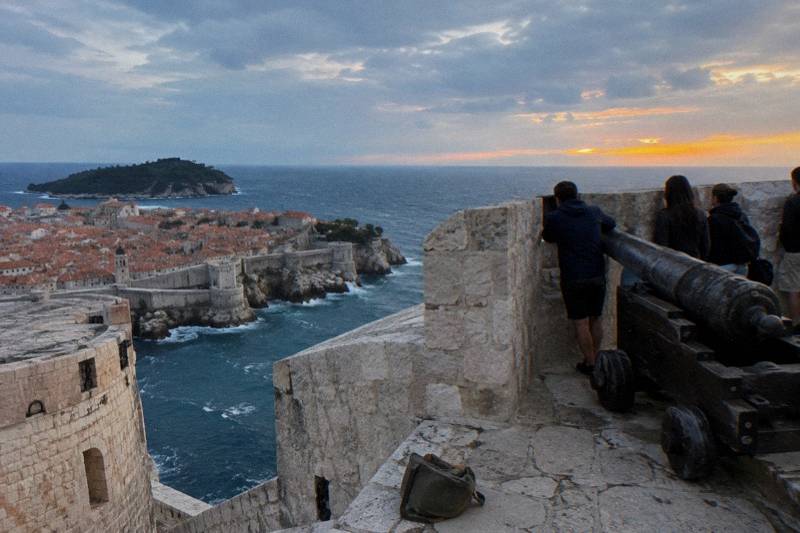
How The Dubrovnik Walls Were Built: From The 13th Century To The Last Bastion
Dubrovnik's walls reached their present shape in the 13th century and the final bastion was completed in 1660. Here is what the official record says about their size, structure and purpose, and which guided walks bring the engineering to life.
Short answer
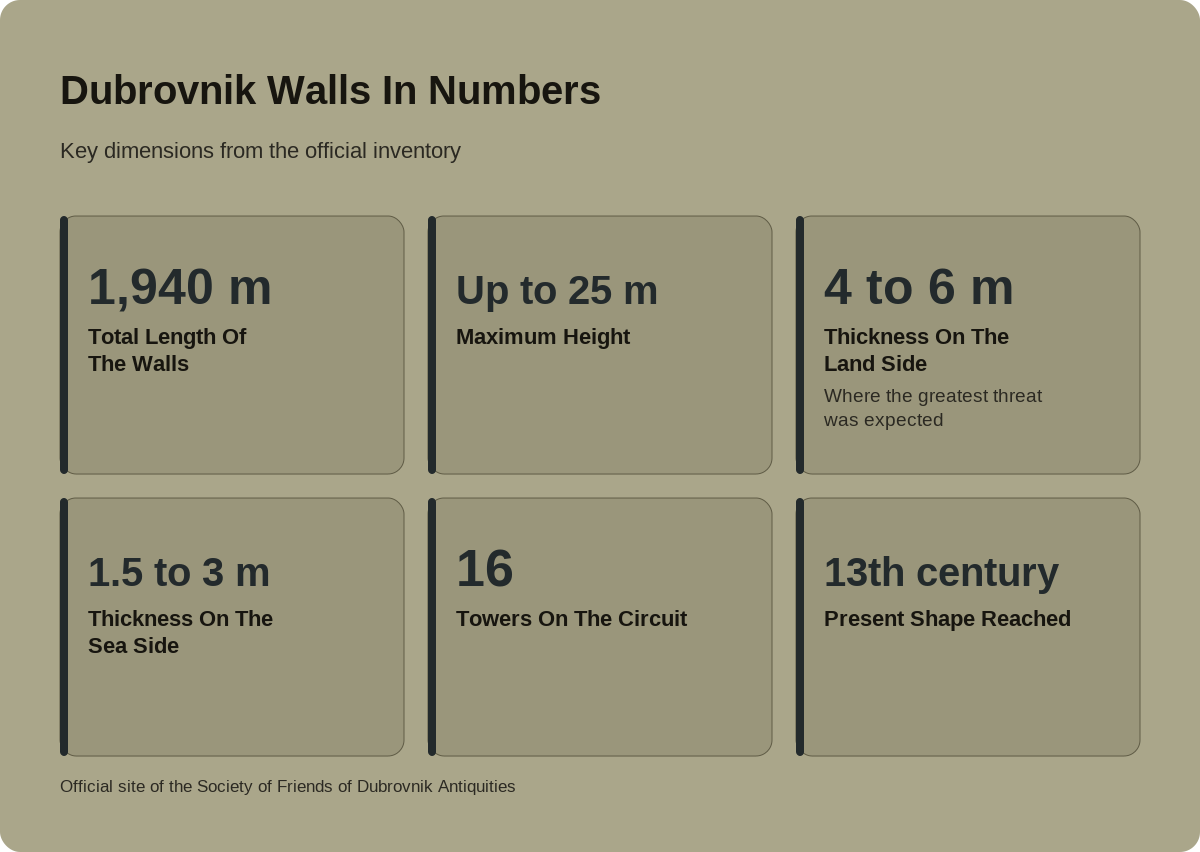
Dubrovnik's walls run 1,940 metres and include sixteen towers, three fortresses and six bastions, reaching up to 25 metres high. The land side is 4 to 6 metres thick, the sea side 1.5 to 3 metres. The shape was reached in the 13th century and the last bastion, St Stephen, was finished in 1660.
This is the history hub of Dubrovnik Walls Tour, where the structures themselves are the story.
| Quick Fact | Figure |
|---|---|
| Total length | 1,940 m |
| Towers | 16 |
| Fortresses | 3 |
| Bastions | 6 |
| Maximum height | Up to 25 m |
| Land-side thickness | 4 to 6 m |
| Sea-side thickness | 1.5 to 3 m |
| Present shape reached | 13th century |
| Last bastion finished | St Stephen, 1660 |
What Shape Did The Dubrovnik Walls Reach, And When?
The walls reached their present shape in the 13th century, and the final addition, the St Stephen bastion, was completed in 1660, according to the official site run by the Society of Friends of Dubrovnik Antiquities. Everything you walk on today belongs to a structure that was essentially locked in more than seven centuries ago, then refined over four hundred years of additions. That long building window is why the circuit mixes medieval stonework with later, angular bastion design.
The official description of the walls gives the full inventory in one sentence: a main city wall, sixteen towers, three fortresses, six bastions, two corner fortifications, three bulwarks with rows of turrets, three moats, two flank fortresses, one breakwater and two drawbridges. It is a remarkable list because it spans so many eras of defensive thinking. Towers and moats belong to the medieval toolkit; the low, angled bastions are a response to gunpowder artillery, and the breakwater and sea walls answer a threat from the water.
The 13th century date matters for how you read the circuit. When a guide points out a round tower, you are usually looking at the oldest layer of thinking. When you reach a squat, star-shaped platform with thick, sloping walls, you are looking at a later answer to cannon. The St Stephen bastion at the southern sea edge, finished in 1660, is the youngest piece of the puzzle, closing a gap in the sea-facing line.
A good way to internalise the sequence is to walk with someone who names the layers as you pass them. The most reviewed option on this site is the 2-Hour Walls & Wars Walk by Dubrovnik Walks, rated 4.9 across 1,434 reviews and priced from €25 per person, with the walls ticket extra and free cancellation up to 24 hours ahead. For a slower, private version, the Private Walls, Stories & Views tour by Dubrovnik Walking Tours (rated 4.9 across 127 reviews, from €100, walls ticket extra, free cancellation up to 24 hours ahead) lets you linger at whichever tower interests you most.
How Big Are The Dubrovnik Walls In Numbers?
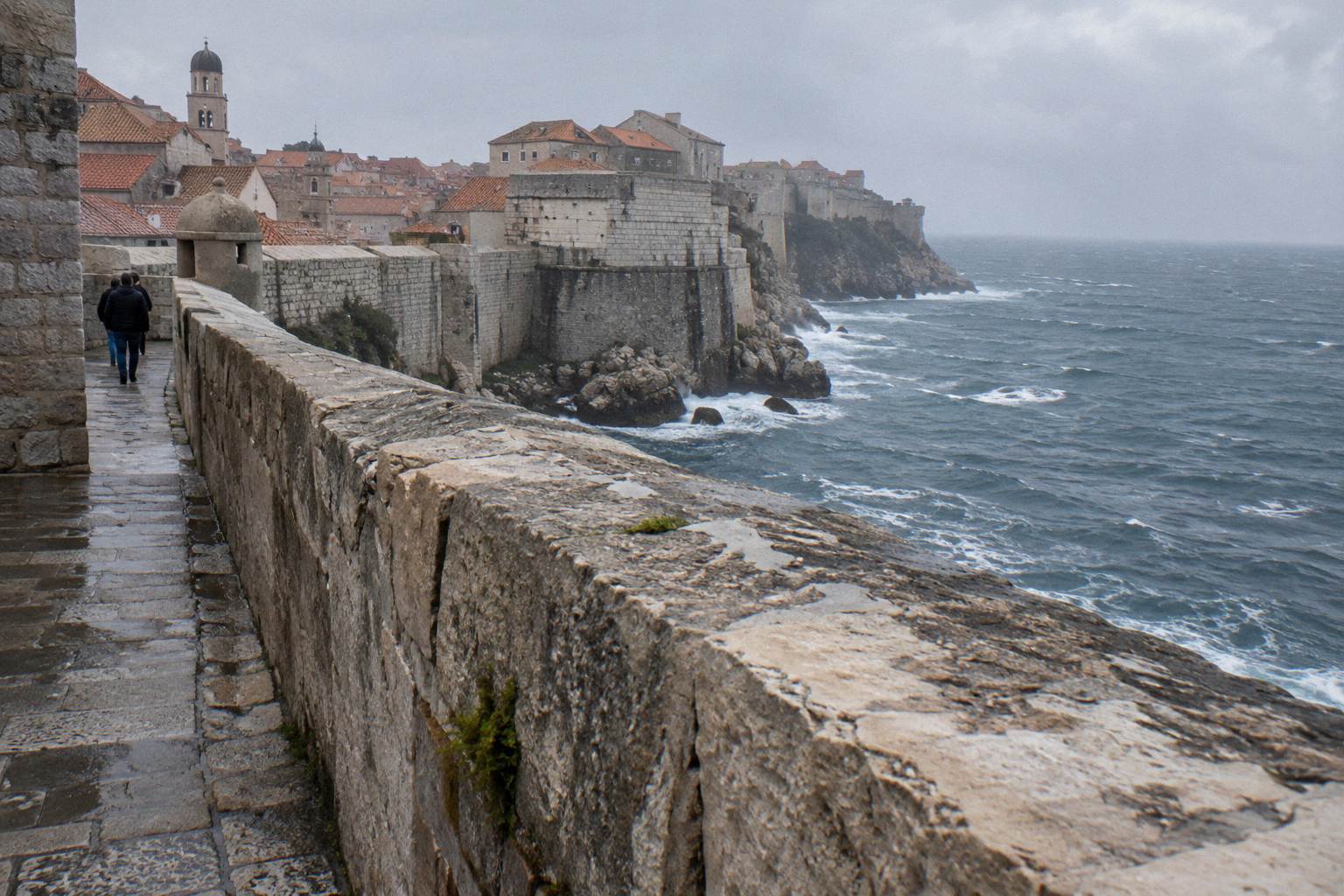
The walls run 1,940 metres and rise as high as 25 metres at some points. The main wall is 4 to 6 metres thick on the land side and 1.5 to 3 metres on the sea side, a deliberate asymmetry: the city feared armies on land more than fleets at sea. Fort Lovrijenac, the detached fortress west of the city, stands on a rock 37 metres tall.
That thickness difference is the single most telling number in the whole structure. Medieval and Renaissance builders were not wasteful: every extra metre of stonework cost money and labour. Putting 4 to 6 metres of stone on the land side and just 1.5 to 3 metres on the sea side tells you exactly where Dubrovnik's rulers expected the main assault to come from. The sea walls had to resist ships and small raiding parties; the land walls had to resist siege engines and, later, artillery.
The height figure works the same way. Twenty-five metres is roughly an eight-storey building, and from the wall walk you look down on rooftops rather than across at them. That height, combined with the thickness, is why the circuit still feels massive even though it is under two kilometres around. For comparison, a casual lap of the full 1,940 metres takes most visitors well over an hour with stops; the how long the walls circuit takes question has its own full answer elsewhere on this site.
The numbers also explain the effort of the walk itself. Sixteen towers and six bastions along fewer than two kilometres means a change in level, a gateway or a viewpoint every couple of minutes. You are never on a flat, monotonous rampart for long. The ups and downs between the land wall's high points and the lower sea sections are the physical reality behind the steps, slopes and shade guide, which covers the walking side in detail.
What Do The Towers, Bastions And Fortresses Actually Do?
Each element in the official inventory has a job. Towers give height and flanking fire along a straight wall. Bastions are low, thick, angled platforms built to shrug off cannon fire and to hold guns of their own. The three fortresses anchor the circuit at its most vulnerable points, and the detached Fort Lovrijenac watches over the western approach from its 37 metre rock. Two drawbridges and three moats once guarded the land gates.
Start with the towers. A straight stretch of wall is weak because defenders on top cannot shoot along its base: attackers who reach the foot of the wall are in dead ground. Towers break the line at intervals so that defenders in one tower can fire sideways along the wall face toward the next tower. Sixteen towers spread over fewer than two kilometres means no long stretch goes uncovered. The round towers you pass, including Minčeta at the landward high point, are the medieval expression of this idea; the what you pass on the walls guide identifies each one by position.
Bastions solve a later problem. Once cannon could batter tall, thin medieval towers from a distance, the answer was to go low and thick instead: an angled platform with sloping stone that absorbed shot, mounted with guns, and shaped so that no attacker could find a corner out of the defenders' sight. Six bastions on the circuit, plus three bulwarks with rows of turrets, are Dubrovnik's gunpowder-era layer. The St Stephen bastion, finished in 1660, is the closing move of that long redesign.
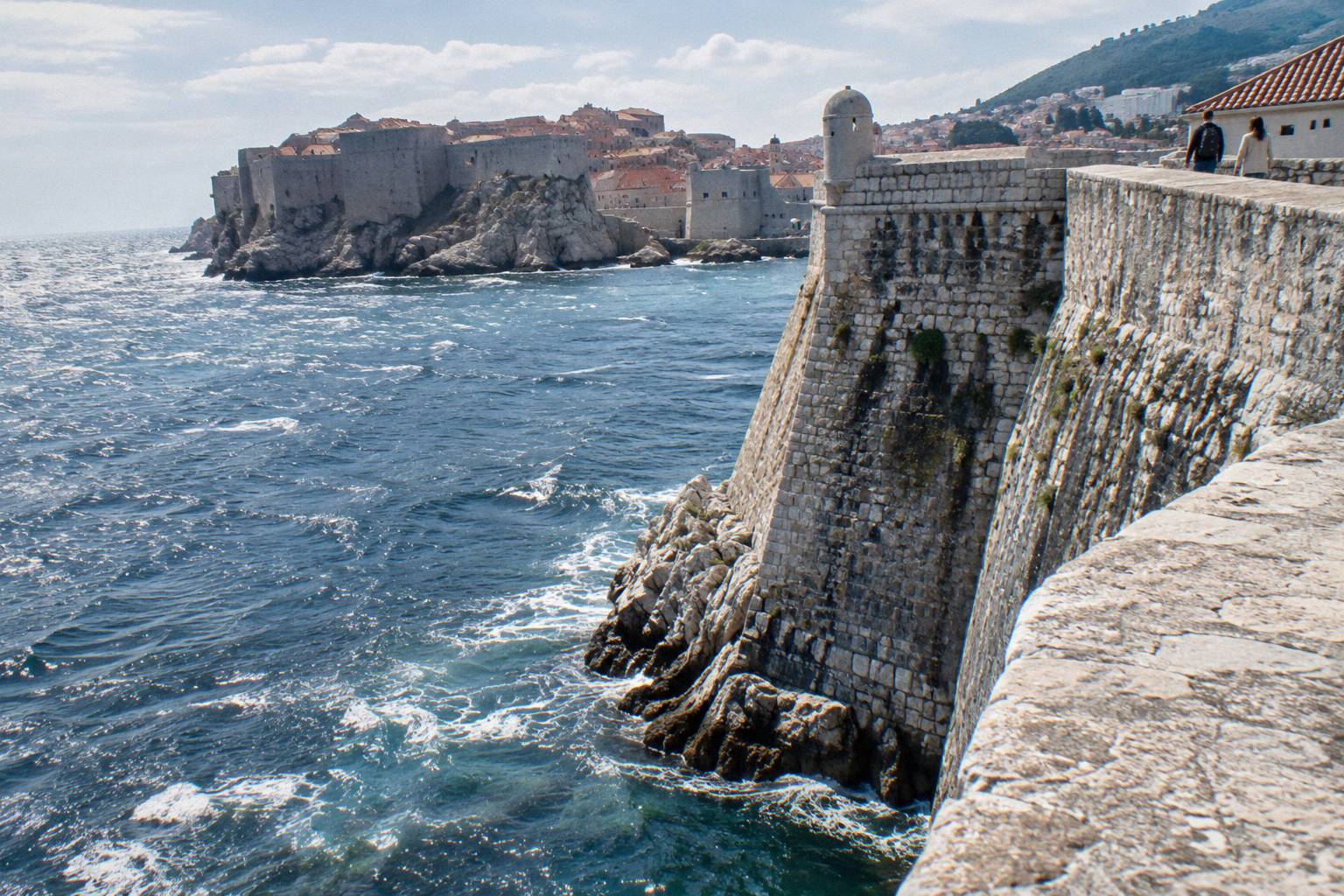
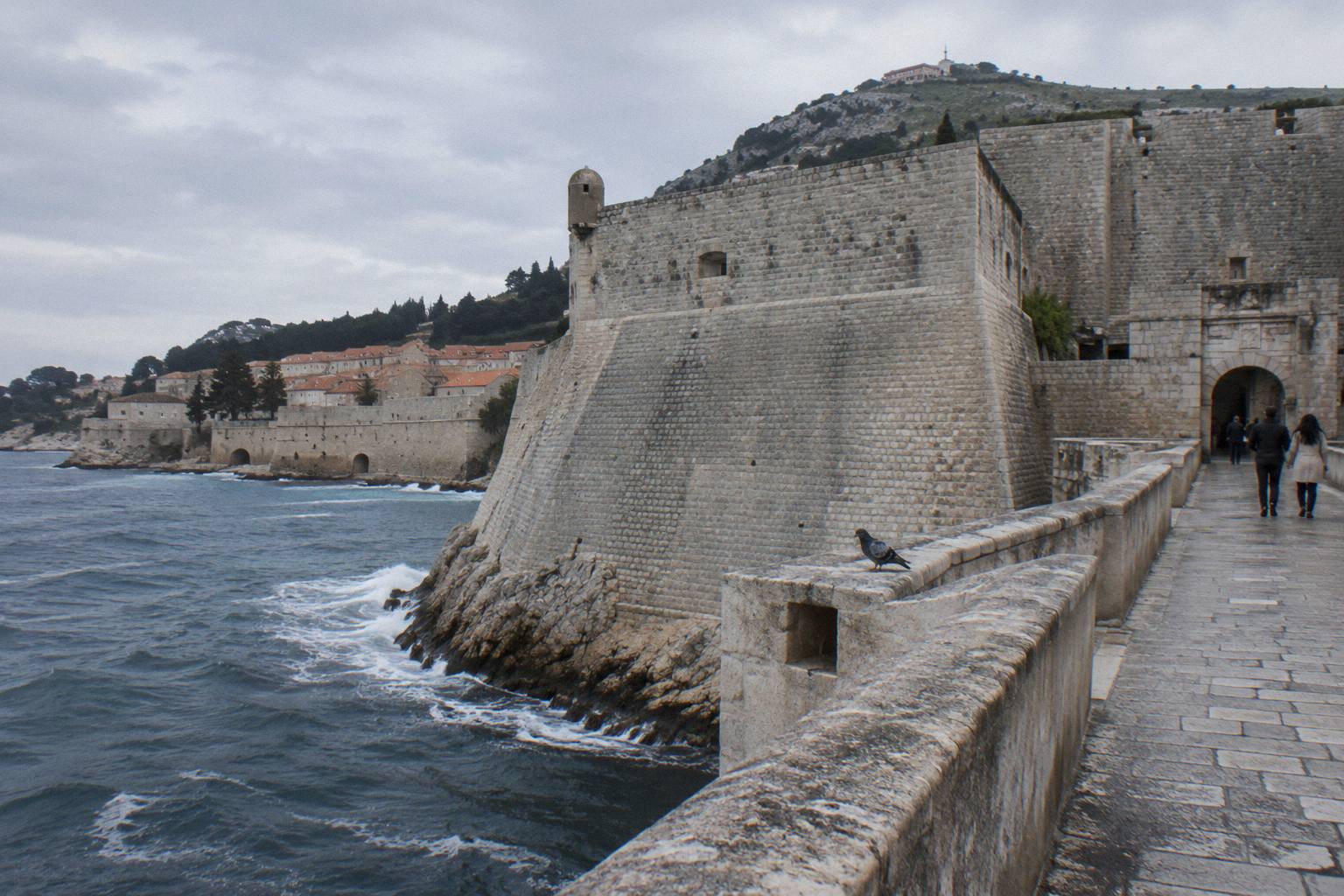
Then there are the fortresses. Three sit within the circuit at its strongest points, and above them all stands the detached Fort Lovrijenac on its 37 metre rock across the small bay from Pile. Its job was to deny the high ground west of the city to any attacker, and, if the worst happened, to fire on the city walls themselves. Per the official ticket FAQ, a City Walls ticket also admits you to Lovrijenac, though a Lovrijenac-only ticket does not work the other way. The one ticket or two guide works through that decision in full.
The Secret Tunnels & Fort Bokar tour by Dubrovnik Local Guides (from €59 per person, 1 hour 30 minutes to 2 hours, walls ticket extra, free cancellation up to 24 hours ahead) is built for exactly this kind of structural curiosity, taking in the hidden passages and the sea-corner fort. Small-group tours like it keep the focus on the engineering rather than the general photo stops.
Why Are The Land Walls Thicker Than The Sea Walls?
The land walls are 4 to 6 metres thick against 1.5 to 3 metres on the sea side because the city's builders spent their stone where the threat was greatest. An army could approach the land side with siege engines and, later, cannon, while the sea itself protected the seaward stretches, which needed only to repel ships and landing parties. The asymmetry is a frozen record of how Dubrovnik's rulers assessed risk.
Thick walls do three things. They resist battering, they cannot easily be undermined through solid stone, and they give a wide top for defenders and guns to operate on. The land side needed all three. The sea side needed mainly height and a continuous parapet: a fleet cannot sit and batter a wall the way a land battery can, and storming from small boats against a 25 metre wall was close to hopeless. So the builders saved an enormous volume of stone by halving the thickness on the seaward stretches.
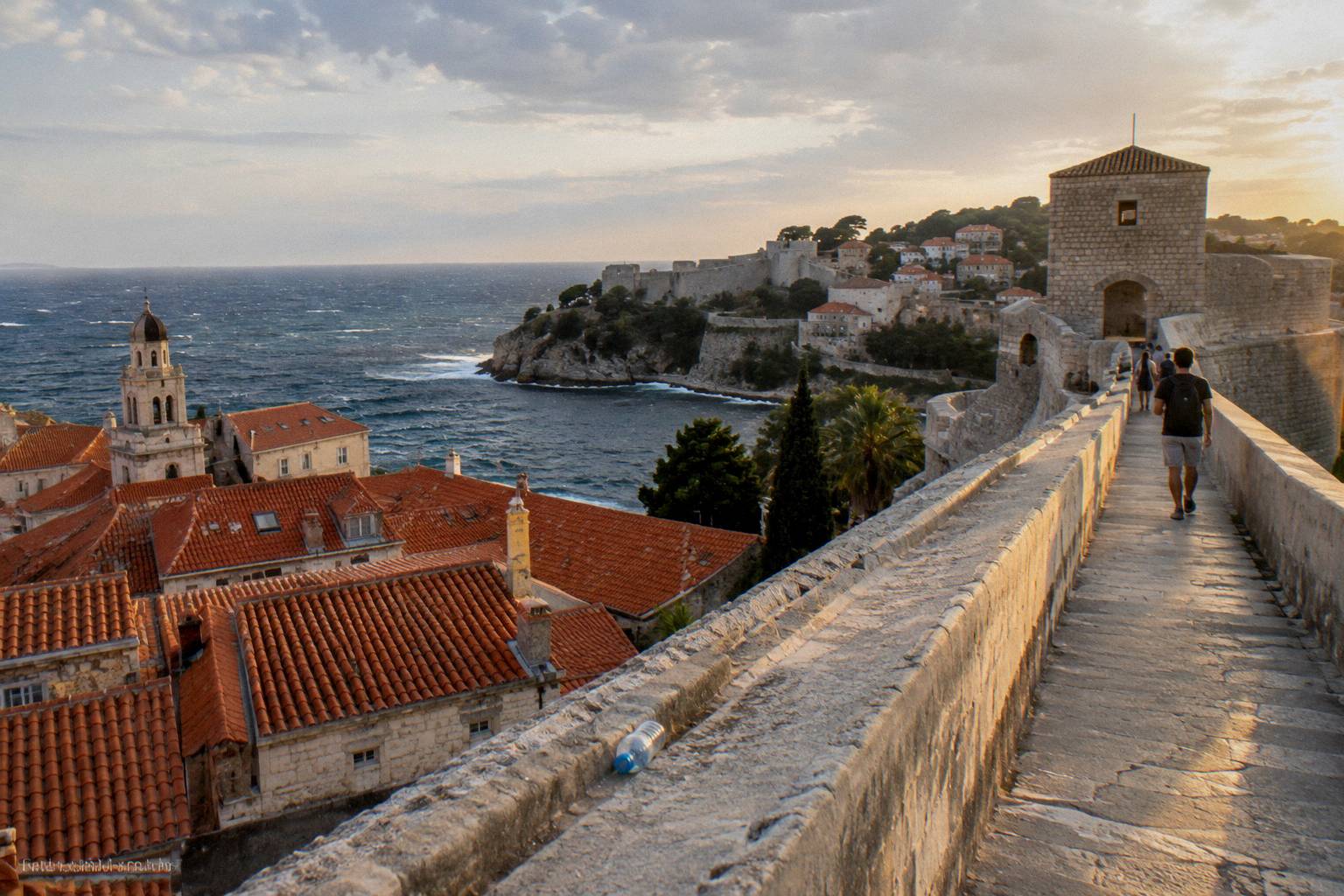
You can feel the difference as you walk. On the landward section the walkway is broad, the stonework looms deep on both sides of you, and the space above the wall feels like a road. Along the southern sea stretch the wall narrows and the view opens, with roof tiles directly below on one side and open water on the other. It is the same structure doing two very different jobs, and it is the kind of thing a guide can point out in one sentence that changes the whole walk.
If the engineering angle is your reason for visiting, pick a tour that promises explanations rather than photo stops. The Walk Of Fame Walls Tour by Dubrovnik Walk Of Fame (rated 4.8 across 76 reviews, from €60 per person, 2 hours, walls ticket extra) is a small-group walk with a licensed English-speaking guide, while the Early Bird Walls Tour by Dubrovnik Bucket List (rated 4.8 across 435 reviews, from €25 per person) covers the same ground in the quiet of the morning. Both offer free cancellation up to 24 hours ahead.
How Did Fort Lovrijenac Fit Into The Defensive System?
Fort Lovrijenac stands detached from the main circuit on a 37 metre rock at the western tip of the city, close enough to cover the land approach from Pile and, in the worst case, to turn its guns on the city walls. Whoever held that rock would command the western walls from above, so Dubrovnik held it first. A City Walls ticket includes entry to the fort, per the official FAQ; a fort-only ticket does not cover the walls.
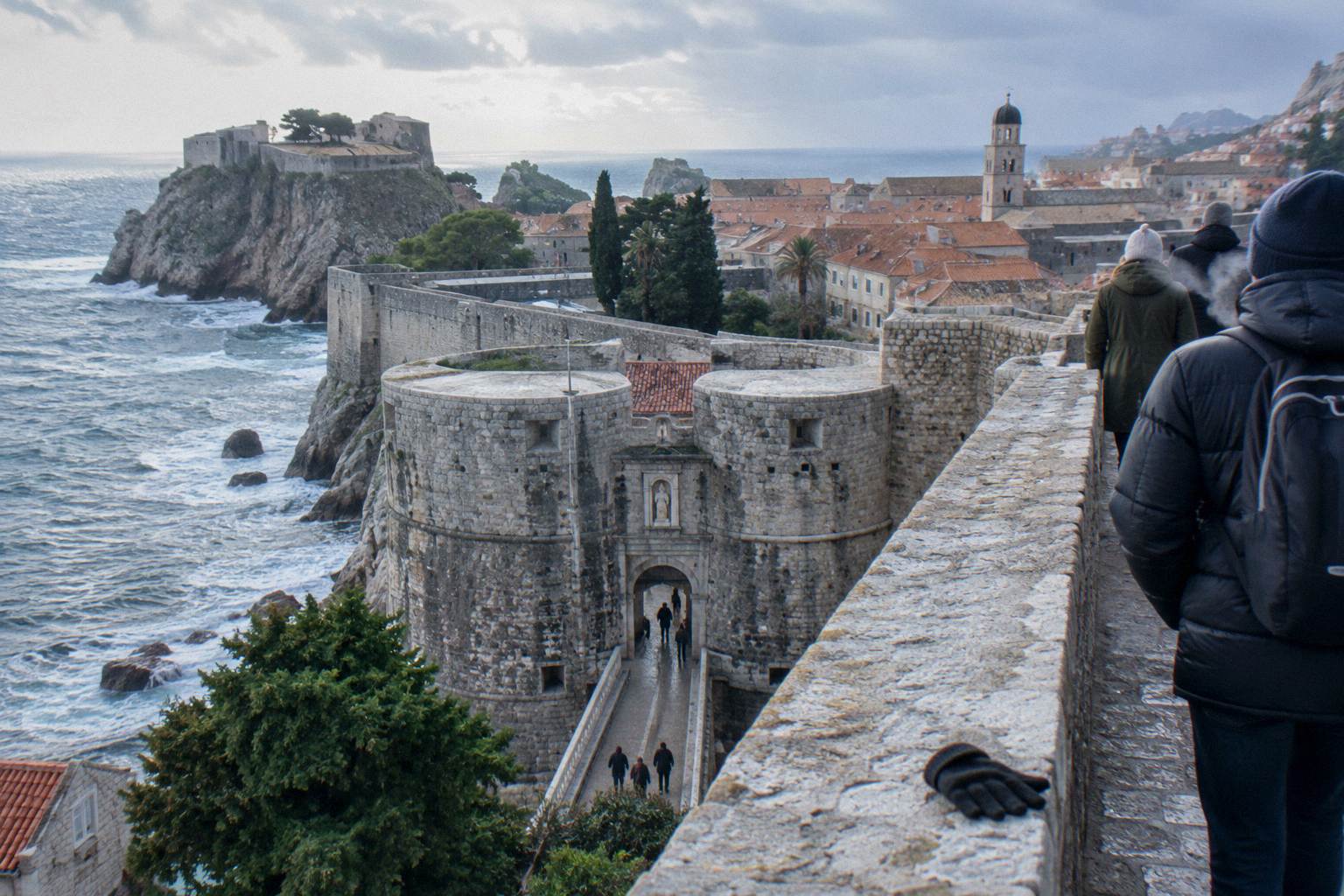
Detached forts are a signature of mature defensive planning. A fortress within the walls can only fire outward; a fortress placed ahead of the walls breaks up an attack before it reaches the main line, and it forces an enemy to capture two positions instead of one. Lovrijenac sits on the far side of a small cove from Pile Gate, visually dominant from the western wall walk, and its height above the sea is dramatic enough that the fort has become one of Dubrovnik's most recognisable silhouettes, as the fort's own history page records.
For walkers, the practical point is the ticket rule. The official FAQ is explicit: buy a City Walls ticket and you can also visit Lovrijenac; buy a Lovrijenac ticket alone and the walls cost extra. So the fort is effectively a free addition to a walls visit, provided you keep your ticket until the end of your circuit, since the ticket is valid for one circuit with no re-entry. Children under 7 enter free, ages 7 to 18 pay a child ticket, and the walls are open every day except 25 December.
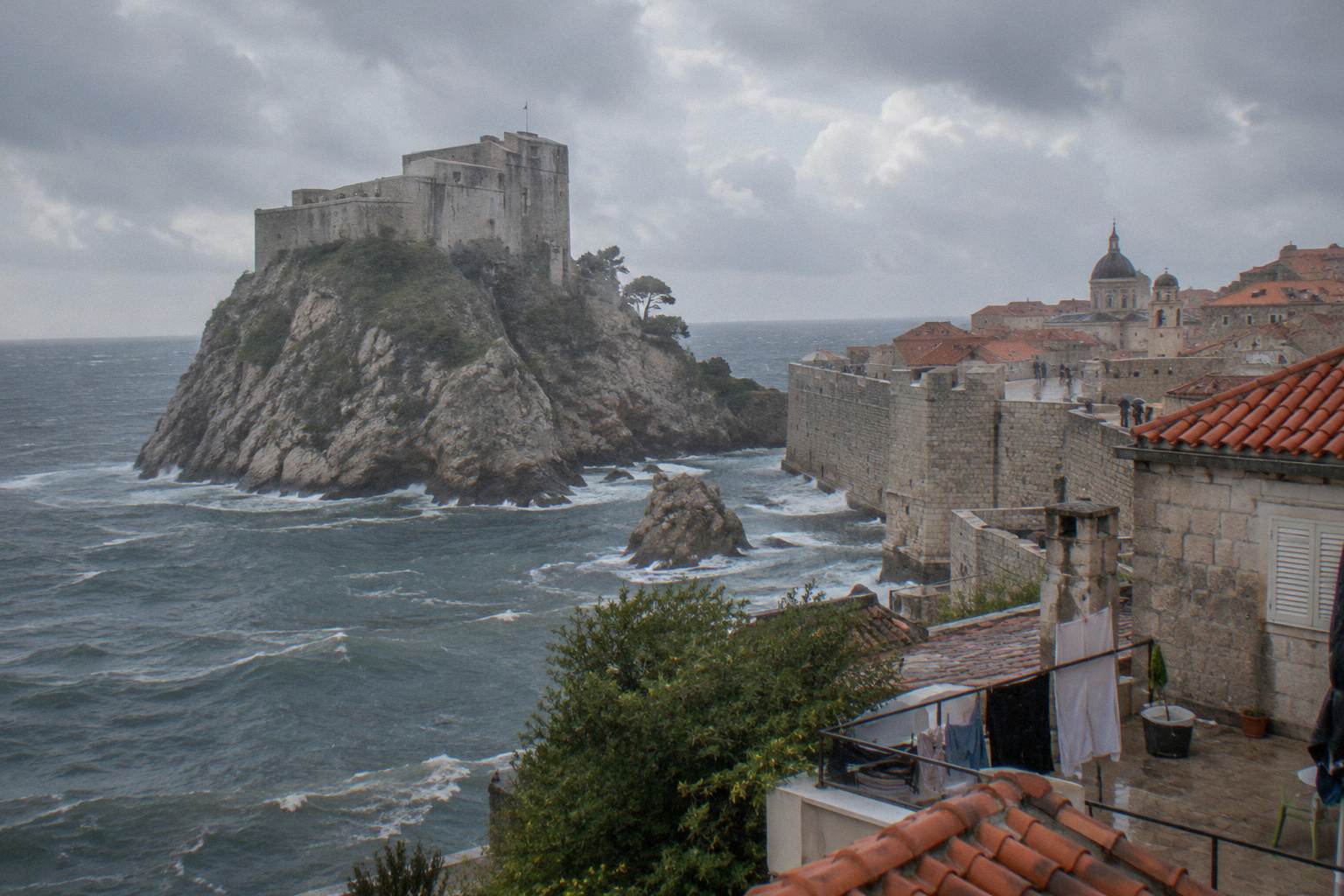
Several tours on this site put the fort at the centre of the visit. The Private Walls & Lovrijenac Fort tour by Dubrovnik Excursions (from €56, 3 hours, private, walls ticket extra) covers both in one private morning, while the Skip-the-Line Lovrijenac Fortress tour by ROSOTRAVEL Croatia (from €204 per person, 2 hours) includes both the walls and fort entry with a licensed guide in your chosen language. Both carry free cancellation up to 24 hours ahead. The full decision between seeing the fort inside or outside a tour is covered in the Lovrijenac and the walls guide.
What Are The Moats, Drawbridges And Bulwarks For?
The three moats, two drawbridges and three bulwarks with rows of turrets all belong to the landward gates and approaches. A moat stops attackers from reaching the wall foot or undermining it; a drawbridge lets the garrison cut the gate approach at will; the bulwarks are layered outer works that break up an assault before it reaches the main wall. Together they formed a sequence of obstacles at the land gates, where the walls are also at their thickest.
Think of the land approach to the city as a funnel. An attacking force would first meet the bulwarks, low outer works with their own rows of turrets, designed to be held even if the main gate ahead fell. Behind them ran the moats, dry or wet, that kept siege ladders and digging parties away from the wall base. Only then came the gate itself, reached by drawbridge, with the 4 to 6 metre main wall behind it. Each layer cost the attacker time and men, and time was the defender's real weapon: a relief force, weather or disease would eventually break a stalled siege.
Two drawbridges in the official count means the serious land entrances were limited to two chokepoints. Today's visitors walk in and out of Pile and Ploce on solid ground, and the moats have long since been filled or converted, but the gate towers still show their original shape. When you leave Pile Gate and look back at the layered stonework around the entrance, you are reading the funnel in the walls themselves.
The structural details reward a guide's commentary. The Small-Group Walk With A Local by Dubrovnik Local Guides (rated 5 across 90 reviews, from €36 per person, 2 hours to 2 hours 20 minutes, walls ticket extra) is a small-group option with a licensed English-speaking guide, and the Sunset Walls Walk by Experience Dubrovnik (rated 5 across 60 reviews, from €25, 2 hours, walls ticket extra) runs the same stories in evening light. Both offer free cancellation up to 24 hours ahead.
Which Tour Best Shows The Walls' Engineering Story?
For the walls' engineering story, the 2-Hour Walls & Wars Walk by Dubrovnik Walks is the strongest pick, as the most reviewed tour on this site at 4.9 across 1,434 reviews, from €25 per person. For more depth per tower, choose Private Walls, Stories & Views from €100. In every case the walls ticket is extra unless the tour includes it.
The right choice depends on how much of the engineering you want unpacked. A general two-hour walk names the towers and gives you the headline numbers, which is enough for most visitors. A private walk lets you stop at the St Stephen bastion or the land wall's thickest stretch for as long as the questions keep coming, and the per-person private options on this site range from the Private Walls, Flexible Timing tour by ASTRA tours - Dubrovnik (rated 5 across 25 reviews, from €100, 1 hour to 2 hours, walls ticket extra) to the Premium Private Walls Walk by Elite Travel LTD (from €320, 3 hours), one of the few rows where the walls ticket is included.
| Tour (operator) | Format | Duration | From price | Walls ticket |
|---|---|---|---|---|
| 2-Hour Walls & Wars Walk (Dubrovnik Walks) | Small group | 2 hours | €25 per person | Extra |
| Private Walls, Stories & Views (Dubrovnik Walking Tours) | Private | 2 hours | €100 | Extra |
| Secret Tunnels & Fort Bokar (Dubrovnik Local Guides) | Small group | 1.5 to 2 hours | €59 per person | Extra |
| Early Bird Walls Tour (Dubrovnik Bucket List) | Small group | 2 hours | €25 per person | Extra |
| Premium Private Walls Walk (Elite Travel LTD) | Private | 3 hours | €320 | Included |
| Walk Of Fame Walls Tour (Dubrovnik Walk Of Fame) | Small group | 2 hours | €60 per person | Extra |
All six carry free cancellation up to 24 hours ahead, so the weather cannot lock you in. Timing matters as much as the tour: the light on the southern sea walls changes completely between morning and evening, and the best time of day guide covers when to go in full. If you would rather go at your own pace with the numbers in your head, the guided or self-guided comparison sets out the trade-off honestly.
What Trips People Up When Reading The Walls' History?
The most common mistakes are reading every tower as the same age, expecting the sea walls to feel as massive as the land walls, and assuming a guide can skip the ticket. The circuit mixes 13th century shapes with bastions finished as late as 1660, the sea side is deliberately half the thickness of the land side, and every visitor enters with a purchased ticket. Either the tour price includes it or you buy it yourself.
Here is a short list of the traps, with the fix for each:
- Treating the walls as one build. They are a 13th century shape refined over four centuries. When a guide says a tower is older than a bastion, believe the geometry: round means older, low and angled means later.
- Skipping Lovrijenac. The City Walls ticket already covers the fort, per the official FAQ, so leaving it out wastes part of what you paid for. Keep your ticket until the end of the visit.
- Assuming the ticket allows re-entry. It is valid for one circuit only. Plan a single, complete visit rather than a morning half and an evening half.
- Expecting a guide to bypass the entrance. No reservation is needed for the walls themselves, tickets are available at the official webshop, and every visitor, guided or not, enters with a purchased ticket. The does a guided tour skip the queue post answers that one in full.
- Forgetting the rules of the walk. Children must be supervised, dogs are allowed on a lead (larger dogs muzzled), there is no leaning or photographing at the wall edge, and the official rules ask you to bring water, a hat and sunscreen.
| Official Rule | What It Means For You |
|---|---|
| One circuit, no re-entry | Finish the full loop in a single visit |
| Ticket kept until the end | Hold on to it, it also admits you to Fort Lovrijenac |
| Children under 7 free | Ages 7 to 18 pay a child ticket |
| Dogs on a lead, larger dogs muzzled | Pets are allowed, under control |
| No leaning or edge photography | Photos from the walkway, not the parapet |
| Open every day except 25 December | Winter period runs 1 November to 31 March |
One more planning note that belongs here rather than anywhere else: the sites are hard to access for people with disabilities, per the official FAQ, and the open days run every day of the year except 25 December, with a winter period from 1 November to 31 March. For the current day's hours, the official webshop is the page to check; the seasonal picture lives in the opening hours by season guide.
Getting to the walls is simple whichever direction you arrive from. Three entrances serve the circuit: next to St Luke's Church on the east side, next to St Saviour's Church by the Big Onofrio Fountain at Pile, and by the Maritime Museum at St John's Fortress, per the Dubrovnik tourist board. If you are staying outside the old town, the city bus network's single ticket bought on board costs EUR 2.50 per the official Libertas price list, with lines 1A, 1B and 3 serving Pile Gate and Gruz, the cruise port. Which entrance suits you is decided in the which walls entrance to start from guide.
One final framing helps put the whole structure in perspective. The walls were the project of a small maritime republic that spent centuries and a large share of its public revenue on making its land side effectively unbreakable, and the result is that the circuit survives complete today, from the 13th century towers to the St Stephen bastion of 1660, with its sixteen towers, six bastions and three fortresses all still standing and all still walkable. Whether you take the most reviewed small-group walk or a private two hours with a licensed guide, you are reading four centuries of engineering in under two kilometres.
Common Questions About How The Dubrovnik Walls Were Built
When Were The Dubrovnik Walls Built?
The walls reached their present shape in the 13th century, and the final addition, the St Stephen bastion, was finished in 1660, per the official site. The circuit you walk today therefore combines medieval towers with later gunpowder-era bastions added over roughly four centuries.
How Long Are The Dubrovnik Walls?
The walls are 1,940 metres long, made up of a main wall, sixteen towers, three fortresses, six bastions, two corner fortifications, three bulwarks, three moats, two flank fortresses, one breakwater and two drawbridges.
How Thick And How High Are The Dubrovnik Walls?
The main wall is 4 to 6 metres thick on the land side and 1.5 to 3 metres on the sea side, and the walls reach up to 25 metres high at some points. Fort Lovrijenac stands apart on a 37 metre rock.
Why Is The Land Side Of The Walls Thicker?
Because the land side faced the greater threat. Armies could bring siege engines and, later, cannon against the land walls, while the sea itself protected the seaward stretches, so the builders doubled the stone where the risk was highest.
Does A City Walls Ticket Include Fort Lovrijenac?
Yes. Per the official FAQ, a City Walls ticket also admits you to Fort Lovrijenac, but a Lovrijenac-only ticket does not cover the walls. The walls ticket is valid for one circuit with no re-entry, and the walls are open every day except 25 December.
Is A Guide Needed To Understand The Walls' History?
No guide is needed to enter the walls, per the official FAQ, and you can walk the circuit on your own. Many visitors still book a licensed guided walk for the stories behind each tower and bastion; the most reviewed option on this site is the 2-Hour Walls & Wars Walk by Dubrovnik Walks, rated 4.9 across 1,434 reviews, from €25 per person.