How Hard Is Walking The Dubrovnik Walls? Steps, Slopes And Shade
The Dubrovnik walls run 1,940 metres with stairs, slopes and almost no shade. Here is what the official rules actually say about the effort, and which paced small-group walks make it easier.
Short answer
Nobody publishes a verified step count for the Dubrovnik walls, so the effort cannot be reduced to a number. What is verified: the circuit is 1,940 m long, climbs to 25 m high in places, has three entrances, no re-entry, and the official rules tell you to bring water, a hat and sunscreen. Two-hour guided walks from €25 pace the route for you.
The walls are run by the Society of Friends of Dubrovnik Antiquities, and the structural figures quoted here come straight from the official City Walls site. Dubrovnik Walls Tour collects every guided and private way of walking them so you can compare lengths, prices and group formats side by side. This page covers one question only: how much physical effort the walk demands, and what you can do to reduce it.
For the wider planning picture, the guides on which walls entrance to start from and opening hours by season and best time of day cover the where and the when. Here it is the how hard.
How Many Steps Are The Dubrovnik Walls, Honestly?
Nobody has published a verified step count for the Dubrovnik walls, so any precise number you see elsewhere is an estimate, not a fact. The only official figure is the length: 1,940 metres for the full circuit. Expect stairs up to and down from the wall top, ramped stone slopes between sections, and continuous walking on uneven masonry, making it a sustained two hours on your feet rather than a staircase challenge.
Search for a step count and you will find plenty of confident figures. None of them can be traced to the walls' operator, the tourist board, or any measurement that has been published and checked. The official frequently asked questions page confirms that no guide is needed, that no reservation is required, and that the sites are hard to access for people with disabilities, but it does not quantify the walking. That absence is itself the honest answer: the operator does not describe the walls in steps because the experience varies with the route you take, the crowd flow on the day, and how often you stop.
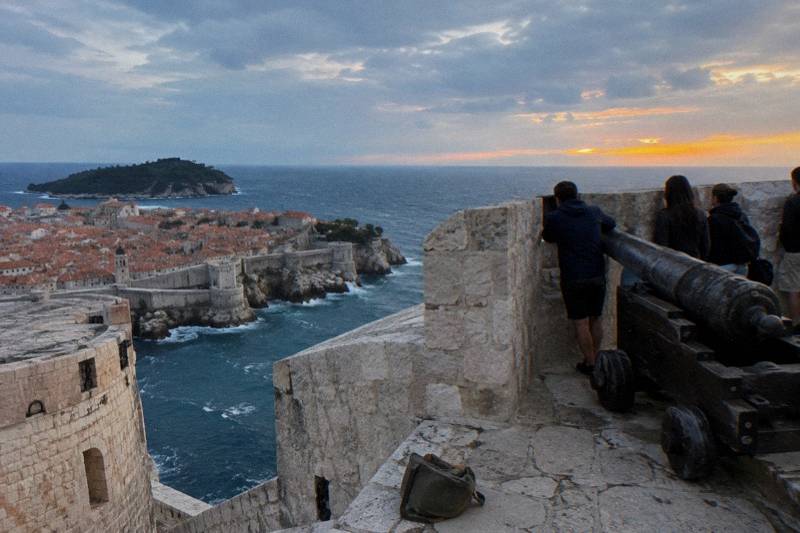
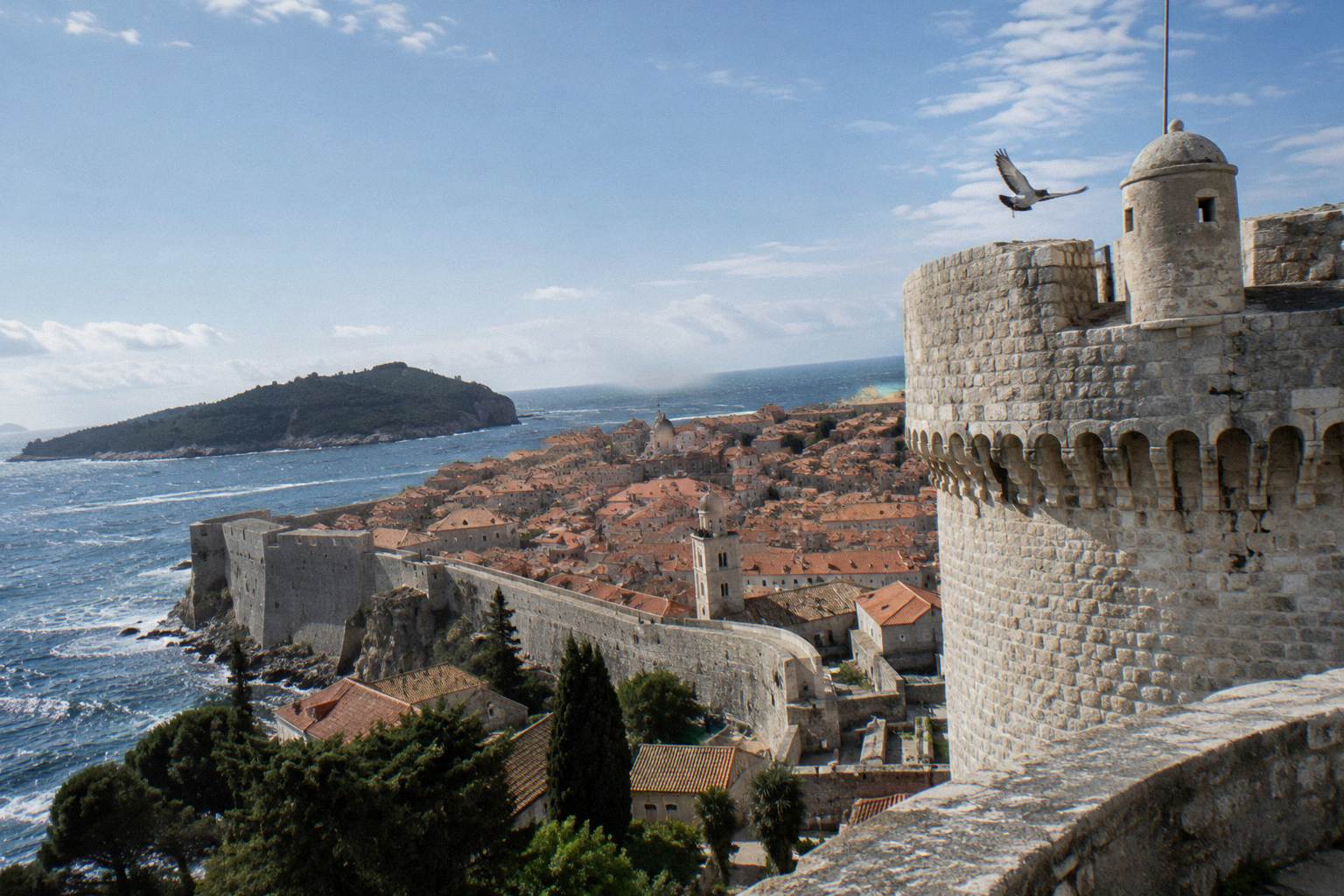
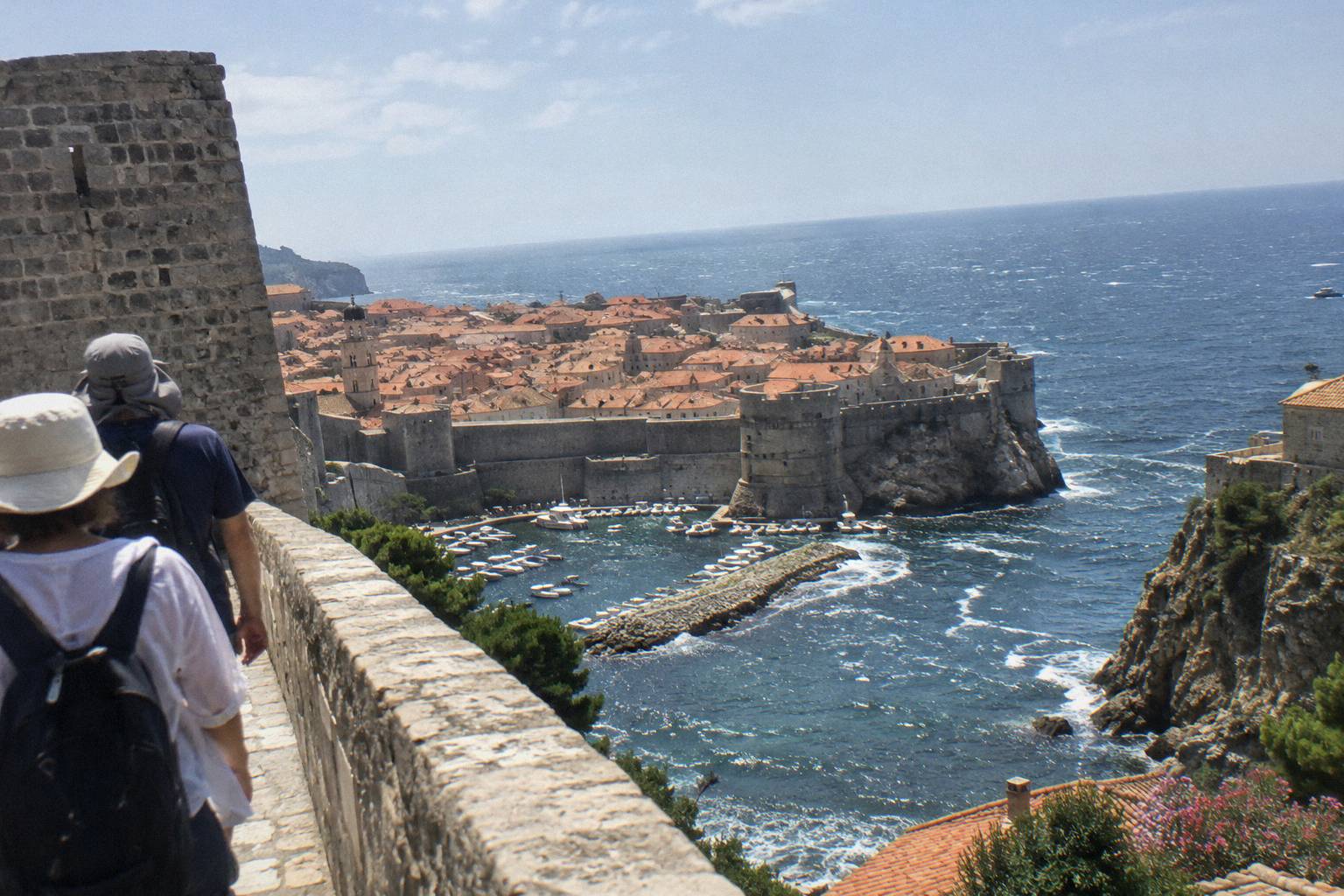
What can be described accurately is the character of the surface. The main wall is 4 to 6 metres thick on the land side and 1.5 to 3 metres on the sea side, and the walkway on top follows the historic profile, which means it rises and falls with the bastions and towers rather than sitting level. There are sixteen towers, three fortresses and six bastions along the line, and passing through or past these structures means changes in level: short flights of stone steps, ramps, and narrower sections where the walkway pinches.
The length figure helps convert this into realistic expectations. A 1,940 metre circuit at a gentle sightseeing pace, with stops at the towers and viewpoints, is what the market prices as a two-hour experience: the guided walks in the roster run from 1 hour 30 minutes to 3 hours, and most sit at 2 hours. That is a useful proxy. No roster row publishes a step count either, but the durations tell you how long operators expect an average group to be walking and standing.
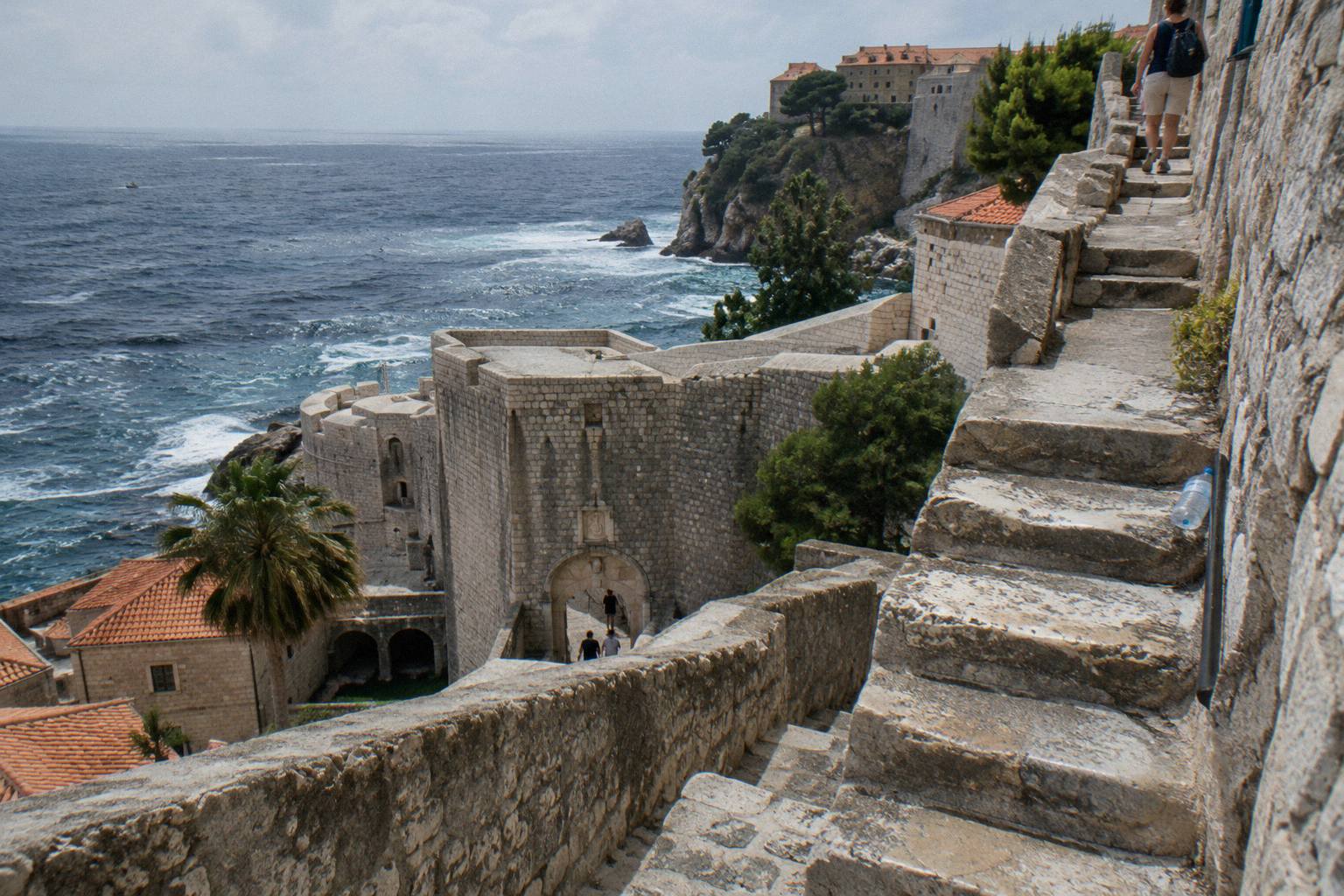
So the honest framing is this: the walls are a 1,940 metre walk on historic stone at height, with stairs and slopes, that most operators pace over about two hours. If you can comfortably walk for two hours in a town with some stair climbing, the walls are within reach. If you cannot manage stairs without a rail, the official statement that the sites are hard to access for people with disabilities is the deciding fact, and a guided walk will not change the masonry.
| Verified Walls Figure | What It Means For Effort |
|---|---|
| 1,940 m total length | Roughly two hours of walking and standing at sightseeing pace |
| Up to 25 m high at some points | Height exposure on sections of the wall top |
| Sixteen towers, three fortresses, six bastions | Frequent level changes, steps and ramps between sections |
| Main wall 4 to 6 m thick land side | The walkway is substantial, not a narrow ledge |
| Hard to access for people with disabilities | Official wording, no step-free circuit exists |
What The Climb And The Slopes Actually Feel Like
The climbing comes in two forms: the initial ascent from street level to the wall top at your chosen entrance, then repeated short rises and dips as the route passes over bastions and towers, though none have verified gradients, so no percentage figures can be given. You enter at one of three points, each beside a different landmark, and the ticket covers one circuit only, with no re-entry, so the entire climb must happen in one visit.
Start with the entrances, because your entry point shapes the first and hardest climb. The official tourist board page, reachable via the Dubrovnik tourist board site, lists three: next to St Luke's Church on the east side opposite the Dominican Church, next to St Saviour's Church by the Big Onofrio Fountain at the Pile end, and at the Maritime Museum in St John's Fortress. All three deliver you onto the wall top by stairs. Ploce Gate, often mentioned by visitors, is a city gate, not one of the three walls entrances, so do not plan an ascent from there.
Once on top, the profile of the walk follows the fortifications themselves. The route crosses the raised platforms of the bastions and dips between them, and passing through a tower often means a short internal stair. The historical detail explains the shape: the walls' final form was reached in the 13th century and the last bastion, St Stephen, was finished in 1660, and the walkway preserves every change of level that centuries of military engineering required. The full construction story lives in the guide on how the Dubrovnik walls were built, damaged and rebuilt; for effort purposes, the takeaway is simply that the surface is authentic medieval masonry, worn smooth in places, and uneven underfoot.
The one-circuit rule matters more than people expect. The official rules state that the ticket is kept until the end of the visit and allows a single tour with no re-entry. Practically, that means no exiting for a coffee halfway and returning, so your legs need to last the full loop. Build in rest at the towers and viewpoints rather than planning to leave and come back. The rules also forbid leaning, climbing or photographing on the wall edge, which keeps everyone a step back from the drop on the high sections, a small but real comfort for anyone uneasy with heights.
The honest summary of the slopes: they are short and repeated, not one long grind. There is no single alpine ascent, just an accumulation of modest climbs spread over two hours. That profile suits a steady walker far better than a stop-start one, which is precisely the argument for a paced guided walk over a solo attempt.
If that pacing argument lands, this is where most readers decide between formats. The three options below are the ones to compare: the related Sunset Walls Walk from Experience Dubrovnik, a small-group 2-hour option from Adria Mice, and the most reviewed walk on the walls.
Each of those three is a guided format, and the format is the point here: a guide sets a walking rhythm, chooses where the group pauses, and keeps the two hours from collapsing into a rushed dash when the wall top gets busy.
Is There Any Shade On The Walls, And How Bad Is The Exposure?
No shade, shelter or toilets on the walls are verified in any official source, so expect full sun exposure for the entire circuit. The operator's own rules of behaviour tell visitors to bring water, a hat and sunscreen, which confirms you should treat the wall top as an open, unshaded stone surface and plan your visit for the cooler part of the day.
The rules of behaviour published by the walls' operator are the controlling document here, and their practical instructions read like a kit list written by people who watch visitors struggle daily: water, a hat, sunscreen, no litter, no jumping or climbing. That is the full extent of what can be stated. Whether any particular stretch offers shade at a particular hour is not published, not verified, and not something to guess at. Stone walls of this type hold heat, and the prudent assumption is sun the whole way round.
The remedy is timing. The hours question has its own page, the season-by-season guide to walls opening hours, and the summer heat question is covered in the blog post on whether it is too hot to walk the walls in summer. In brief for effort purposes: the walls open every day except 25 December, the winter period runs 1 November to 31 March, and the last entry is at closing time. Check the official webshop for today's hours and prices, since the operator does not publish a monthly timetable in text.
Two roster tours exist precisely because of this exposure problem. The Early Bird Walls Tour from Dubrovnik Bucket List (2 hours, from €25 per person, rated 4.8 across 435 reviews) is built around walking before the day heats up and fills up, and the Sunset Walls Walk from Experience Dubrovnik (2 hours, rated 5 across 60 reviews, from €25) does the same from the other end of the day. Neither promises a particular temperature or a clear view; they simply schedule the effort for the gentler hours. The walls ticket is extra on both, so budget for it separately.
If the walk itself feels doable but the heat worries you, an early start is the single most effective adjustment available. The early-morning option below is the one most readers in your position check first.
Beyond timing, kit does the rest of the work. The rules mention water, a hat and sunscreen; add footwear with grip, because worn stone and ramps are less forgiving than modern paving. The blog post on what to wear and bring to walk the walls goes deeper on the packing side. None of this changes the wall, but it changes how the wall feels by the far side of the circuit.
If you would rather hand the timing and the pacing to someone else, the related guided walk below is the natural next step, with free cancellation up to 24 hours before if the forecast turns against you.
Whichever way you book, the underlying facts stay put: one circuit, no re-entry, water and a hat on the official list. Sorting the ticket side of the budget is the remaining half of the plan, and the tickets guide handles it in full.
| Planning Factor | What Is Verified | What To Do About It |
|---|---|---|
| Sun exposure | Official rules say bring water, hat, sunscreen | Assume no shade, walk early or late |
| Surface | Historic masonry, ramps and stairs | Grippy shoes, hands free |
| Rest stops | One circuit, no re-entry | Rest at towers and viewpoints, not off the walls |
| Children | Under 7 free, 7 to 18 child ticket, supervised at all times | One adult per young child on stairs |
Does A Guided Walk Make The Walls Easier?
A guided walk does not change a single step, slope or sunbeam on the walls, but it changes how you distribute the effort, and that is usually the difference between finishing comfortably and dragging. A licensed local guide sets a walking rhythm, builds in pauses at the towers, and manages the group through the narrow, stepped sections. Guided small-group walls walks on the roster run from €25 per person for 2 hours.
The pacing argument deserves spelling out. Walking solo, the natural instinct under crowd pressure is to keep moving, skip the rests and treat the two hours as a target rather than a budget. In a guided group the pauses are institutionalised: the guide stops to talk, and the stop doubles as a breather. Over a 1,940 metre circuit with repeated level changes, a handful of scheduled two-minute stands is worth more than any fitness preparation.
The roster shows how wide the guided spread is. The most reviewed of them, the 2-Hour Walls & Wars Walk from Dubrovnik Walks, is rated 4.9 across 1,434 reviews. The Small-Group Walk With A Local from Dubrovnik Local Guides (2 hours to 2 hours 20 minutes, from €36 per person) is rated 5 across 90 reviews, a strong score from a modest pool. The Walk Of Fame Walls Tour from Dubrovnik Walk Of Fame runs 2 hours from €60 per person, rated 4.8 across 76 reviews. On every one of these rows the walls ticket is listed as extra, so the tour price and the gate are separate decisions; the tickets guide on walls ticket prices and what they cover handles that half of the budget.
Private formats offer the most control of all, since the pace is entirely yours to set. The site's private options are compared in the guide on private walls tours, price, length and who they suit. For a slower walker, a private guide simply walks slower, and that flexibility is the product. One caveat printed plainly: private rows are priced on different bases, per person or per group, and the figures are never comparable across those bases.
The related option worth a look here is the Sunset Walls Walk from Experience Dubrovnik, a 2-hour guided walk with a group or private option, rated 5 across 60 reviews, with free cancellation up to 24 hours before. You can check whether the date you want is open on its page, or check availability directly with the operator.
The depth formats add stops without adding much distance. The Secret Tunnels & Fort Bokar walk from Dubrovnik Local Guides (1 hour 30 minutes to 2 hours, from €59 per person) keeps a short duration while going deeper into Minceta Tower and Fort Bokar, and the towers and forts you pass are catalogued in the guide on Minceta Tower, Bokar and St John Fortress. Short duration, same wall, more interpretation per step walked.
The small-group local-guide format below sits in the middle of that spread: two hours of paced walking with a licensed English-speaking guide, and a review base that supports its score.
One honest limitation to close the section: for the walk itself, guides cannot smooth the stairs or shade the wall. The official statement that the sites are hard to access for people with disabilities applies identically whether you arrive with a group, a private guide, or alone. Guided formats redistribute effort; they do not remove it.
Walking With Kids, Older Walkers Or Slower Legs
Most children and older visitors who can manage stairs in daily life can walk the walls, and the honest test is whether they can walk and stand for about two hours with stair breaks. Children must be supervised at all times, leaning or climbing on the wall edge is forbidden, children under 7 enter free, ages 7 to 18 pay a child ticket, and the sites are described as hard to access for people with disabilities.
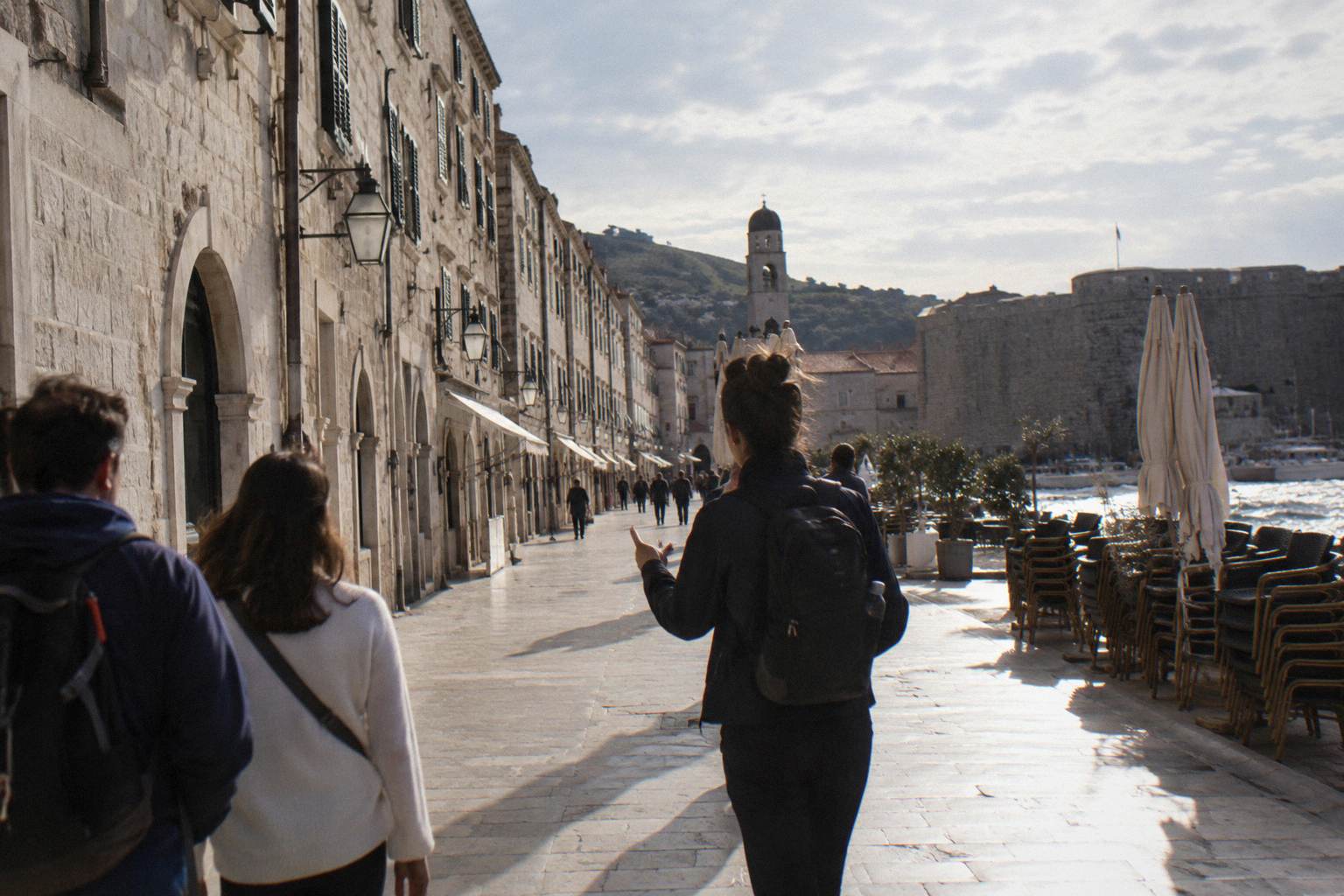
Start with children, since the rules are explicit. Supervision is not a suggestion; it is a published condition of entry, alongside the ban on jumping and climbing. The wall top has high exposed sections, up to 25 m at some points, and narrow pinch points where a group spreads out. In practice that means one adult per confident young walker on the stairs, and a carrier rather than a stroller for anything smaller. The stroller and wheelchair question is examined properly in the blog post on whether the walls are OK for kids, strollers and wheelchairs; the short version here is that the historic stairs make wheeled access impractical.
For older walkers, the arithmetic is favourable in one respect: the length is fixed and modest. A 1,940 metre circuit is shorter than most city sightseeing days, and the towers provide natural rest points. The variable is the stair work, which is repeated rather than sustained. An older walker who comfortably handles a flight or two of stairs with a pause between each will manage the walls at a gentle pace, particularly with a guide who controls that pace. Anyone for whom stairs are a genuine barrier should read the official accessibility wording as decisive.
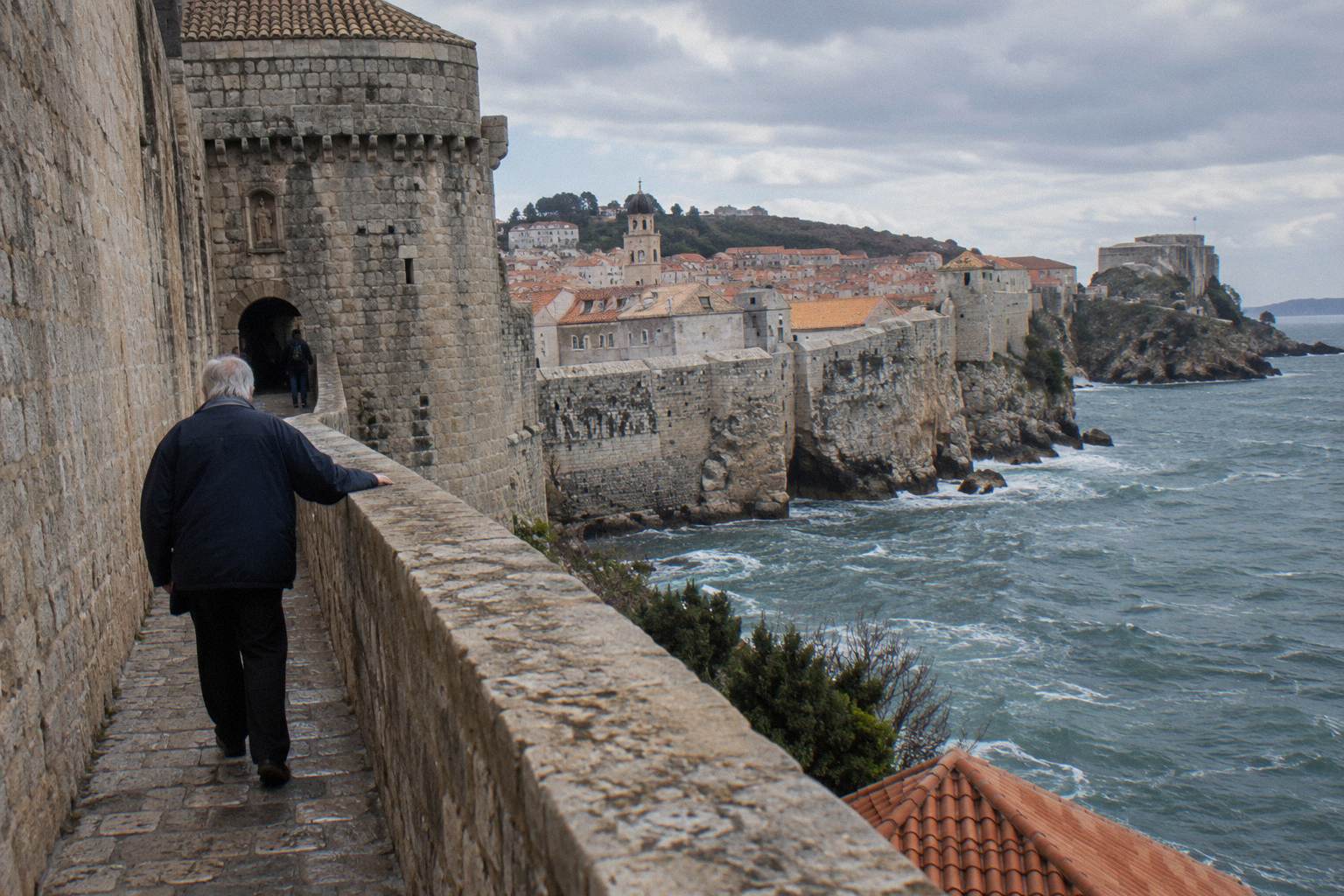
The no re-entry rule deserves a second mention here because it hits slower walkers hardest. With one circuit allowed and the ticket kept until the end, there is no option to leave halfway and return refreshed. A slower walker must therefore budget energy for the whole loop. Two practical responses work: start at the entrance that puts your must-see section first (the entrances guide covers the trade-offs), or book a guided walk whose two-hour pacing already includes the recovery stops.
There is also the shore excursion angle. The Shore Excursion Walls Walk from Elite Travel LTD (3 hours, from €103 per person, rated 4.7 across 29 reviews) includes the walls ticket and comes with a shore excursion guarantee, a format designed for cruise passengers working within a port day; the cruise-day question has its own post at walking the walls on a cruise port day. The longer 3-hour duration compared with standard walks is itself informative: a gentler pace simply takes more time, and operators price it accordingly.
For mixed-ability groups, the honest recommendation is to split formats rather than compromise. Faster walkers take a standard 2-hour group walk; slower walkers book private guidance where the pace is bespoke. The Walk Of Fame Walls Tour option below is a small-group 2-hour format with a solid review base, suited to groups who want structure without private pricing.
What Trips People Up On The Walls: Mistakes To Avoid
Most avoidable trouble on the walls comes down to five planning mistakes rather than fitness: starting in the midday sun, expecting to exit and re-enter, treating Ploce Gate as a walls entrance, assuming the tour price covers the walls ticket, and underestimating the extra climb at Fort Lovrijenac. Each has a fix: official rules cover timing and kit, the one-circuit rule shapes your rest strategy, and tour descriptions state ticket inclusion.
Take them in order of how often they spoil a visit. First, the midday start. The official rules tell visitors to bring water, a hat and sunscreen because the wall top is exposed; starting in the hottest hours turns a manageable walk into an endurance test. The early-morning and sunset departures in the roster exist for exactly this reason. The hours guide shows how the day divides.
Second, the re-entry assumption. The ticket is valid for one circuit with no re-entry, and it must be kept until the end of the visit. Visitors who plan to pop down to the Stradun for lunch halfway through find they have ended their walls visit. Rest on the wall, at the towers and viewpoints, and eat before or after.
Third, the Ploce Gate trap. It is a city gate, not one of the three walls entrances. The three real entry points are next to St Luke's Church on the east side, next to St Saviour's Church by the Big Onofrio Fountain, and at the Maritime Museum in St John's Fortress. Walking to the wrong gate costs time and, in summer, energy. The entrances guide maps the trade-offs between them.
Fourth, the ticket confusion. Whether the walls ticket is included is a per-tour fact, and it varies row by row. Among the walks named on this page, the Early Bird Walls Tour, the Sunset Walls Walk, the Small-Group Walk With A Local, the Walk Of Fame Walls Tour and the 2-Hour Walls & Wars Walk all list the ticket as extra. The shore excursion formats from Elite Travel LTD include it. Never assume; the row for each tour states it.
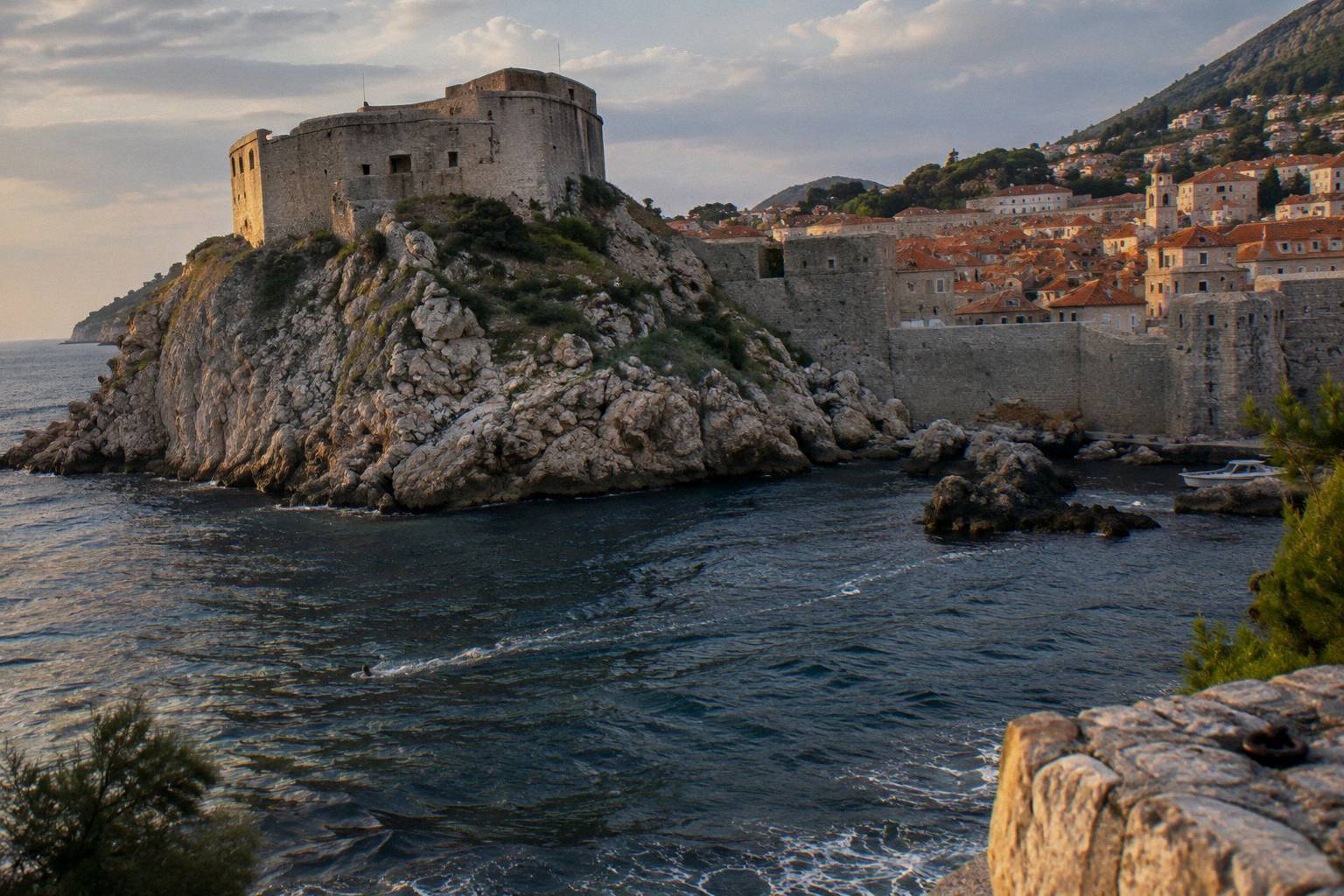
Fifth, the Lovrijenac bonus climb. The walls ticket also admits you to Fort Lovrijenac, which stands on a 37 m rock, and that is an additional ascent many visitors tack on with already-tired legs. The one-ticket-or-two question belongs to the guide on Fort Lovrijenac and the walls, one ticket or two; for effort planning, simply count Lovrijenac as a separate walk in its own right, not an appendix.
| Mistake | The Fix |
|---|---|
| Starting in midday heat | Walk early or late; official rules say water, hat, sunscreen |
| Planning to exit and return | One circuit, no re-entry; rest at the towers instead |
| Heading to Ploce Gate to ascend | It is a city gate; use one of the three real entrances |
| Assuming the tour price covers the ticket | Check the tour's own row; most guided walks list it as extra |
| Adding Lovrijenac on tired legs | It sits on a 37 m rock; treat it as a separate climb |
A final planning note that ties the whole page together. The most reviewed walls walk on the roster, the 2-Hour Walls & Wars Walk from Dubrovnik Walks, is rated 4.9 across 1,434 reviews at from €25 per person, with free cancellation up to 24 hours before. That review pool is the largest evidence base on this site for one proposition: ordinary visitors, at ordinary fitness, finish this walk and rate it highly. For anyone still sizing the effort, the Secret Tunnels & Fort Bokar option below is the shortest guided format on the roster, worth a look if two hours feels long.
Between those two sit the standard formats most visitors choose: the guided small-group walks and the group-or-private options compared below. Whichever you pick, the wall is the same 1,940 metres; what varies is the pace, the timing and who carries the plan.
Common Questions About How Hard The Dubrovnik Walls Are
How Many Steps Are The Dubrovnik Walls?
No verified step count exists. The only official figure is the circuit length of 1,940 metres, walked at sightseeing pace in about two hours, with stairs and ramps between the towers and bastions. Any precise step number you see elsewhere is an estimate.
How Hard Is Walking The Dubrovnik Walls?
For most reasonably mobile adults it is a steady two-hour walk with repeated short stair climbs, not a hike. The official site states the sites are hard to access for people with disabilities, and the rules advise bringing water, a hat and sunscreen, so plan for sun exposure and uneven stone throughout.
Is There Shade On The Dubrovnik Walls?
No shade provision is verified or promised anywhere official. The rules of behaviour tell visitors to bring water, a hat and sunscreen, which is the operator's own signal to plan for full exposure. Early morning and sunset departures are the practical mitigation.
Can Children Walk The Dubrovnik Walls?
Yes, with supervision: the official rules require children to be supervised at all times and forbid climbing on the wall edge. Children under 7 enter free and ages 7 to 18 pay a child ticket. Sections stand up to 25 m high, so one adult per young walker on the stairs is sensible.
Is There A Lift Or Step-Free Way Onto The Walls?
No. All three entrances, next to St Luke's Church, next to St Saviour's Church by the Big Onofrio Fountain, and at the Maritime Museum in St John's Fortress, deliver you to the wall top by stairs. The official FAQ describes the sites as hard to access for people with disabilities.
Does A Guided Tour Make The Walls Walk Easier?
It makes the effort easier to manage, not smaller. A licensed guide sets the rhythm and builds pauses into the 1,940 metre circuit, and guided walks from €25 per person run about two hours. The stairs, sun and stone are identical either way.